Recognizing Peptide Pureness Screening
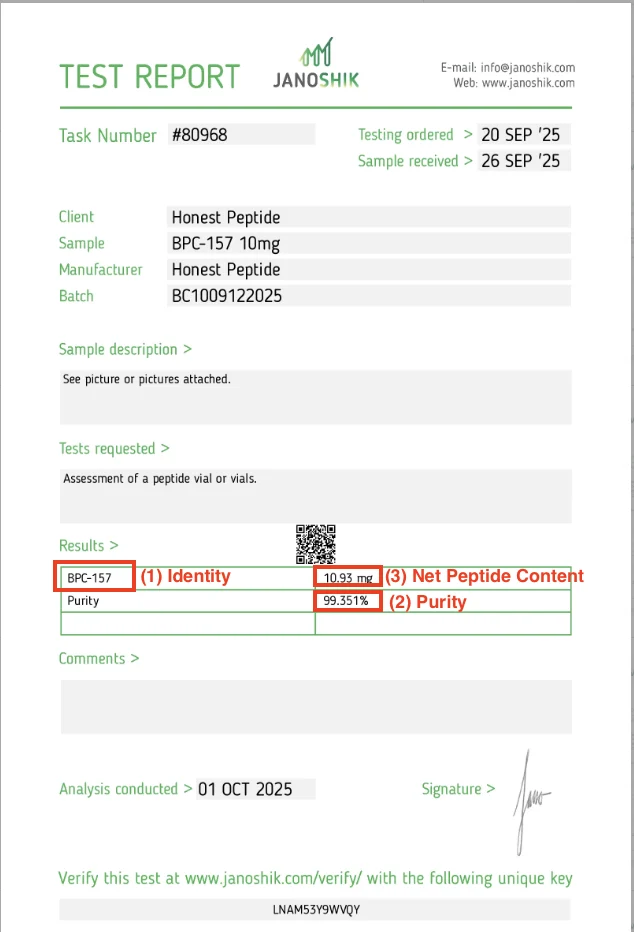
How Hplc Is Used To Examine Peptide Purity Notably, this pureness figure is usually established after purification (e.g. by HPLC) and concentrates on peptide impurities-- it doesn't count recurring water, salts, or counter-ions in the dried out peptide powder. Simply put, the purity percentage has to do with the make-up of peptide types in the sample, not the weight contribution of water or salts. If you have actually ever before acquired an artificial peptide for a laboratory experiment, you've likely noticed a pureness percent on the certification of analysis-- commonly values like 95%, 98%, or even 99%. Peptide pureness is a crucial top quality metric that informs you what fraction of a peptide sample is the designated product versus undesirable by-products. In simple terms, a peptide provided as 95% pure is composed primarily of the target peptide (95%), with the remaining ~ 5% made up of pollutants. These impurities can consist of points like reduced or truncated series, removal variations, oxidized residues, or other minor side-products from the synthesis procedure. Peptides and their contaminations have various hydrophobicities and for that reason spend various quantities of time engaging with Hop over to this website the C18 stationary phase before eluting right into the detector. More hydrophilic substances elute early (reduced retention time); even more hydrophobic substances elute later on (high retention time). The target peptide elutes at a particular retention time, and contaminations elute at different times-- separating them spatially on the chromatogram. In the common peptide COA context, top pureness typically describes the percent of complete chromatogram area represented by the primary peptide peak. It is an area-percent purity measurement, not a total identity or activity test. Peptide testing is effective, however researchers should check out the range of each approach very carefully. Testing costs vary based on analysis type, laboratory, sample intricacy, and turn-around requirements. Recognizing regular pricing helps budget for appropriate verification. Eurofins BioPharma uses comprehensive cGMP screening sustaining medication substance and medicine item programs, from resources release with sterile fill-finish services.
What Is Hplc?
Organizations acquiring wholesale study peptides frequently focus on consistency and quality verification. High-Performance Liquid Chromatography separates compounds within an example to help recognize and measure private elements. Shows that the majority of the examined sample includes the desired peptide compound. Scientist regularly review pureness results as part of Click for info a wider quality-control procedure. Message us straight on WhatsApp for any type of inquiries about our screening procedure or items. A 2016 survey released in Nature found that more than 70% of scientists had tried and fallen short to duplicate an additional scientist's experiments. While peptide purity isn't the only aspect, utilizing poorly defined reagents is a recognized factor to irreproducible results. This is why credible providers provide both HPLC and MS data on their Certifications of Analysis. As molecules exit the column, they travel through a detector-- generally a UV detector set to 214 or 220 nm, wavelengths where the peptide bond absorbs light strongly. The detector documents how much UV light is absorbed with time, creating a graph called a chromatogram. Purity is the percentage of books in the delivery that have every page published properly, in the right order, without any missing chapters and no added web pages packed in.Where Can I Purchase Laboratory Evaluated Peptides?
Where can I send my peptides to check for purity?
ACS Peptide Testing Labs is an expert peptide analysis lab that accepts samples from all 50 states. Whether you need to evaluate peptide pureness, confirm a distributor''s Certification of Analysis, or run thorough contaminant screening, our laboratory provides quickly, precise outcomes with thorough reporting.
- Various substances connect with this product differently, causing them to arise from the column at various times.
- Due to the fact that peptides are produced through complex chemical processes, trace pollutants can develop naturally.
- Comprehending common pricing assists budget for suitable confirmation.
- GLP-1 agonists and relevant substances for weight loss applications bring certain problems.
- You might additionally need to take a look at the family member advantages of freeze-dried vs. keeping the peptide in remedy, including stability testing.